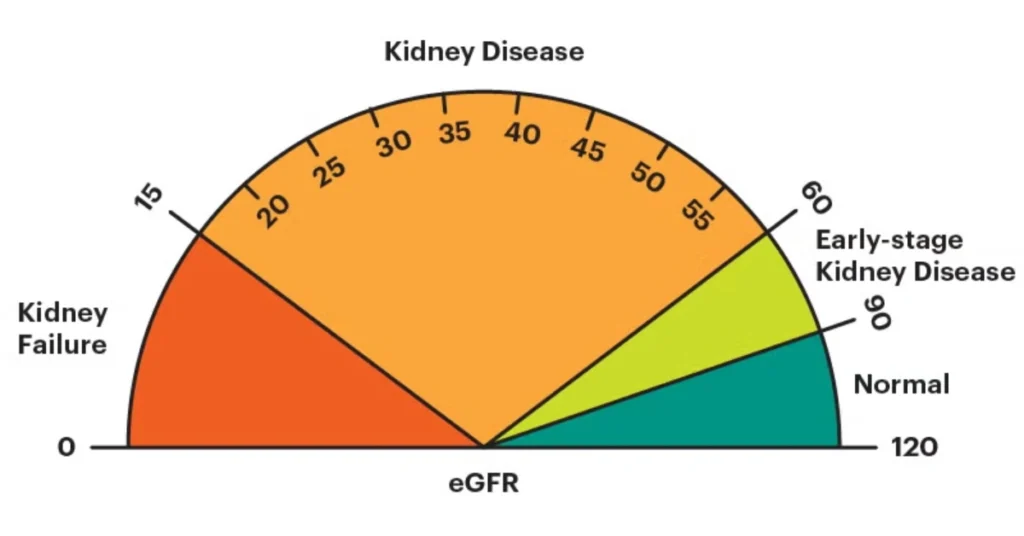
Kidney Function: It’s natural to feel anxious whenever a health-related figure suddenly appears. Many people become worried when they see their eGFR (kidney function) report, especially when it falls below 60. Recently, a similar question arose: someone’s eGFR was 53 ml/min/1.73 m², and they wanted to know if it could be raised above 59. To understand, we spoke with a kidney specialist.
Dr Nikhil Bhasin, Consultant Nephrologist and Renal Transplant Physician (Wockhardt Hospital, Mumbai), explains that an eGFR of 53 is generally considered stage 3A chronic kidney disease. This is a stage where the kidneys are functioning slightly slower than their normal capacity, but it’s not a condition to immediately panic about. A gradual decrease in eGFR with ageing is normal, and many people live healthy lives without dialysis for years, even at this level.

Can an eGFR of 53 become “normal” (above 59) again?
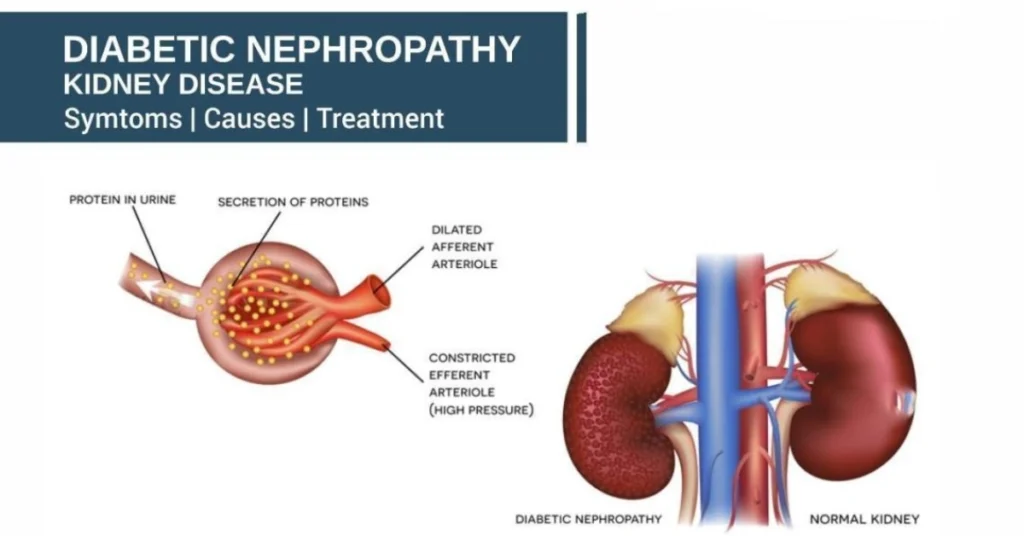
Dr Bhasin says this is the question he gets asked most often. He explains that while it’s not always possible to reverse kidney function decline, it’s entirely possible to stabilise it. If the drop in eGFR is due to temporary causes—such as dehydration, the effects of certain medications, or an infection there’s a chance of improvement.
But if the cause is a chronic condition, such as diabetes, high blood pressure, or natural decline with age, doctors primarily aim to halt progression and stabilise levels. He compares it to an older car: “You can’t make it brand new, but with good care, you can keep it running beautifully for a long time.”
What should be checked immediately after a low eGFR is detected
Speedy attention after a low kidney function is crucial, as early care can prevent further damage. First and foremost, it’s important to keep blood pressure under control, as high blood pressure silently damages the kidneys. Doctors recommend a target of around 130/80.

Also, monitor blood sugar, as diabetes even borderline, can rapidly impair kidney function. Certain medications, especially painkillers like ibuprofen, some antibiotics, or tests with contrast dye, can affect the kidneys, so caution is necessary when using them.
In addition, the Urine ACR test measures how “leaky” the kidneys are and how much protein is being excreted. This test is crucial in understanding the actual condition of the kidneys.
F&Q: Common questions about eGFR
- Is an eGFR of 53 considered dangerous?
- This is a moderate decrease, but not a cause for immediate alarm. With proper care, it can be stabilised for a long time.
- Can eGFR return?
- If the decrease is temporary, then yes. But for chronic causes, stability is the goal rather than improvement.
- Does this require dialysis?
- An eGFR of 53 does not require dialysis. This is stage 3A CKD.
- Which medications can affect kidney function?
- Painkillers (such as ibuprofen), some antibiotics, and tests with contrast dye can affect the kidneys.
- Can low water intake cause a drop in eGFR?
Dehydration can sometimes temporarily lower eGFR.
Disclaimer: This article is for awareness and general information purposes only. The information provided here is in no way a substitute for medical advice. Consult your doctor or a certified specialist for any health concerns related to kidney function, eGFR, or any other health issue.