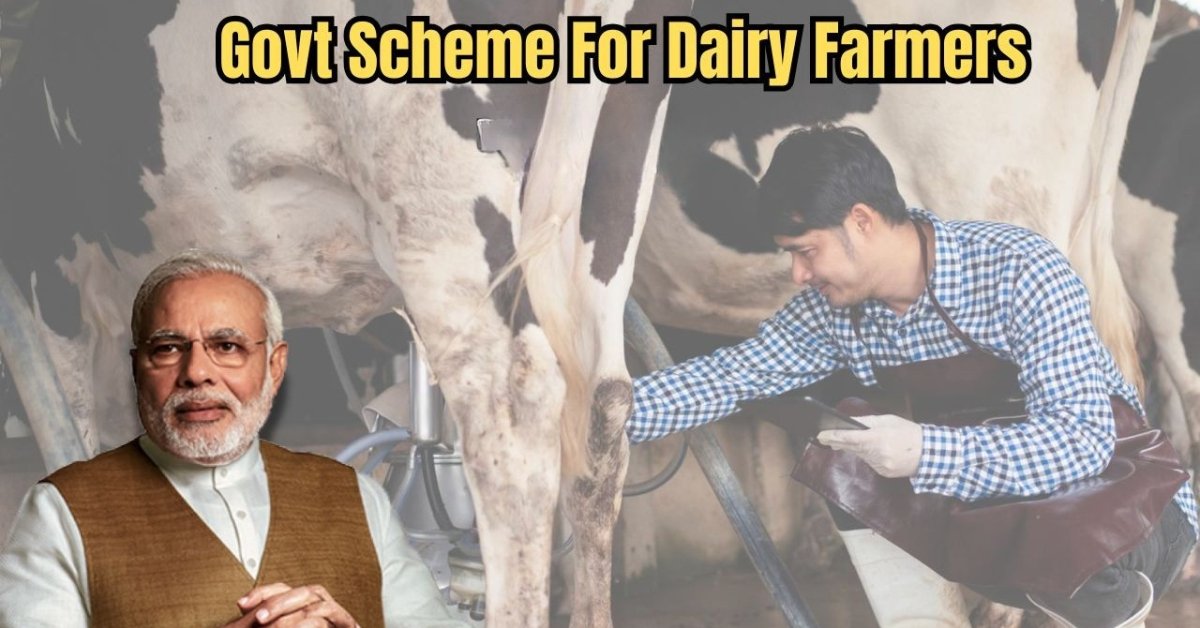
Dairy Plus Scheme 2025: Animal husbandry has always been the backbone of families in rural areas. This is why the government is continuously implementing schemes that help increase the income of animal herders. One such scheme is the Chief Minister’s Dairy Plus Scheme, which has gained immense popularity among rural and young farmers in recent months. The aim of this scheme is not only to increase milk production but also to make people self-reliant by providing them with sustainable employment.
Chief Minister’s Dairy Plus Scheme: A Golden Opportunity for Animal Herders

Under this scheme, high-quality Murrah breed buffaloes are being made available to farmers and villagers at a subsidy of 50% to 75%. Murrah buffaloes are considered one of the highest milk-producing breeds in the country, providing animal herders with excellent monthly income.
The scheme aims to double milk production in the state and revitalize the rural economy. The government aims to provide employment to thousands of families through this scheme.
15 beneficiaries in Neemuch district received two Murrah buffaloes each.
This scheme is being implemented rapidly in Neemuch district of Madhya Pradesh. Recently, 15 farmers were provided with two Murrah buffaloes each at a subsidized rate, purchased from Karnal, Haryana.
The Deputy Director of Animal Husbandry stated that the target set for 2025 has been met. The government is working on a mission to double milk production in the next five years, and the Dairy Plus scheme is playing a key role in this. The National Animal Disease Control and Artificial Insemination Programs are also continuously operating.

How much subsidy is available under the scheme? Learn the full details.
The total cost of two Murrah buffaloes is approximately ₹295,000.
The subsidy rules are as follows:
- General category: 50% subsidy
- They have to contribute approximately ₹147,500 themselves.
- SC/ST Category: 75% Subsidy
- They only need to contribute ₹73,700.
The government provides the remaining amount. This subsidy is so substantial that starting animal husbandry becomes extremely easy.
Who can apply? Not just farmers
The special feature of this scheme is that the benefits are not limited to farmers. Any rural citizen, whether a farmer or a young unemployed person, can apply. This scheme is attracting youth to the dairy business and becoming a secure source of stable income for many families.
How to Apply?
To avail the scheme, applicants must contact their nearest veterinary office. The process is completed by submitting the application form and documents there. In several districts, more than 30 people have already benefited from this scheme in just a few months.
Why is the Murrah Buffalo the best choice?
Murrah Buffalo is renowned for its high milk production capacity. According to experts, two Murrah buffaloes can produce up to 20 liters of milk daily. A family can earn thousands of rupees every month by selling milk in the local market. For this reason, dairy farming is considered a stable and reliable source of income in rural areas.
Dairy Business: A Strong Foundation for Employment and Self-Reliance

The Animal Husbandry Department believes that dairy farming is the most powerful way to generate employment in rural areas. The Dairy Plus scheme is increasing new dairy units, boosting production and income.
Women are earning by running home-based dairy farms, while youth are moving towards self-employment. This scheme is giving a new direction to the rural economy.
FAQ – Frequently Asked Questions
Q1. Is this scheme only for farmers?
No, any rural citizen can apply.
Q2. How much do buffaloes cost?
Around ₹2.95 lakh (for two buffaloes).
Q3. Is the subsidy directly credited to the account?
Yes, the government directly adjusts contributions.
Q4. Are women also allowed to apply?
Yes, women can also benefit from this scheme.
Disclaimer: This article is based on available government information and media reports. Changes to the scheme, subsidy amount, and eligibility criteria may be updated by the government from time to time. Before making any decisions, please obtain official information from the Animal Husbandry Department in your district.