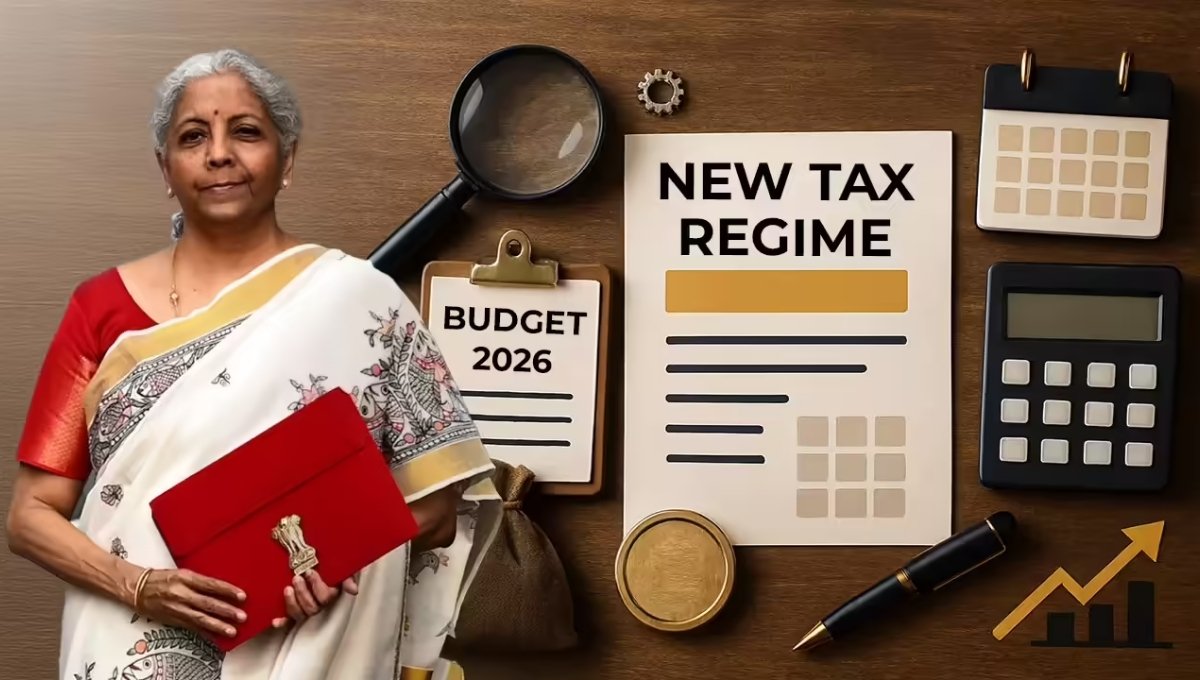
Budget 2026: Every year, as February draws near, everyone from the average person to tax professionals begins to focus on the nation’s budget. With reference to Budget 2026, a similar mood is present. The same question is being asked everywhere, from tea stands to office hallways: will the government do away with the previous income tax system entirely this time?
The government has progressively improved the new income tax system over the past few years. Additionally, it is now the default system. This has heightened the debate about whether Budget 2026 will mark the end of the previous tax system and the beginning of the nation’s transition to a single tax system.

How the New Tax System Affected the Situation

There was a great deal of uncertainty when the new tax system was originally implemented. Many people found it unappealing to give up deductions and exemptions in favor of lower tax slabs. However, major modifications occurred throughout time. These days, a person who earns up to ₹12 lakh a year is essentially exempt from paying income tax.
This change’s effects are readily apparent. Many middle-class and salaried people have switched to the new tax system. Tax computation is now simpler, and submitting appears to be less difficult than it was in the past. Because of this, the government now believes that maintaining two distinct tax systems might not be required.
In Budget 2026, what will happen to the previous tax system?
The government has not yet released an official announcement, but a number of studies and surveys suggest that the previous tax system may be progressively eliminated. According to tax experts, this shift won’t occur all at once. Alternatively, the government might move forward gradually to allow people to get used to it.

The implications of Budget 2026 for the Middle Class
The middle class will be most affected if the previous tax system is phased out. The good news is that the new tax system has greatly lessened the tax burden on those with lesser earnings. As a result, you have more money to spend.
However, those who depend on investment-based tax planning might need to reconsider their approaches. In the future, long-term financial growth and wise investments may take precedence over tax savings.
Will the tax structure be significantly altered by Budget 2026

The most important question surrounding Budget 2026 is whether it will take specific action or merely provide a suggestion. The current situation suggests that the government won’t deliver an abrupt shock, but it might make it clear that the nation will transition to a single tax system in the years to come.
This modification may be a significant step in streamlining the tax system, which will benefit taxpayers as well as make administrative tasks easier.
FAQs
Will the old tax regime be completely abolished in Budget 2026?
There is no official confirmation yet, but there is a possibility of it being phased out gradually.
Why is there no tax on income up to ₹12 lakh in the new tax regime?
The tax becomes zero due to the basic exemption limit, standard deduction, and rebate.
What will be the disadvantages for people who remain in the old tax regime?
If the changes are implemented gradually, people will have time to adjust, and the likelihood of sudden losses will be reduced.
Will Budget 2026 be beneficial for the middle class?
The indications are that the middle class may continue to benefit in terms of tax relief.
Disclaimer: This article is based on publicly available reports, surveys, and discussions related to the budget. The information provided is for general informational purposes only. The final decision regarding Budget 2026 will depend on the official announcement by the government. Please consult your tax advisor before making any tax-related decisions.